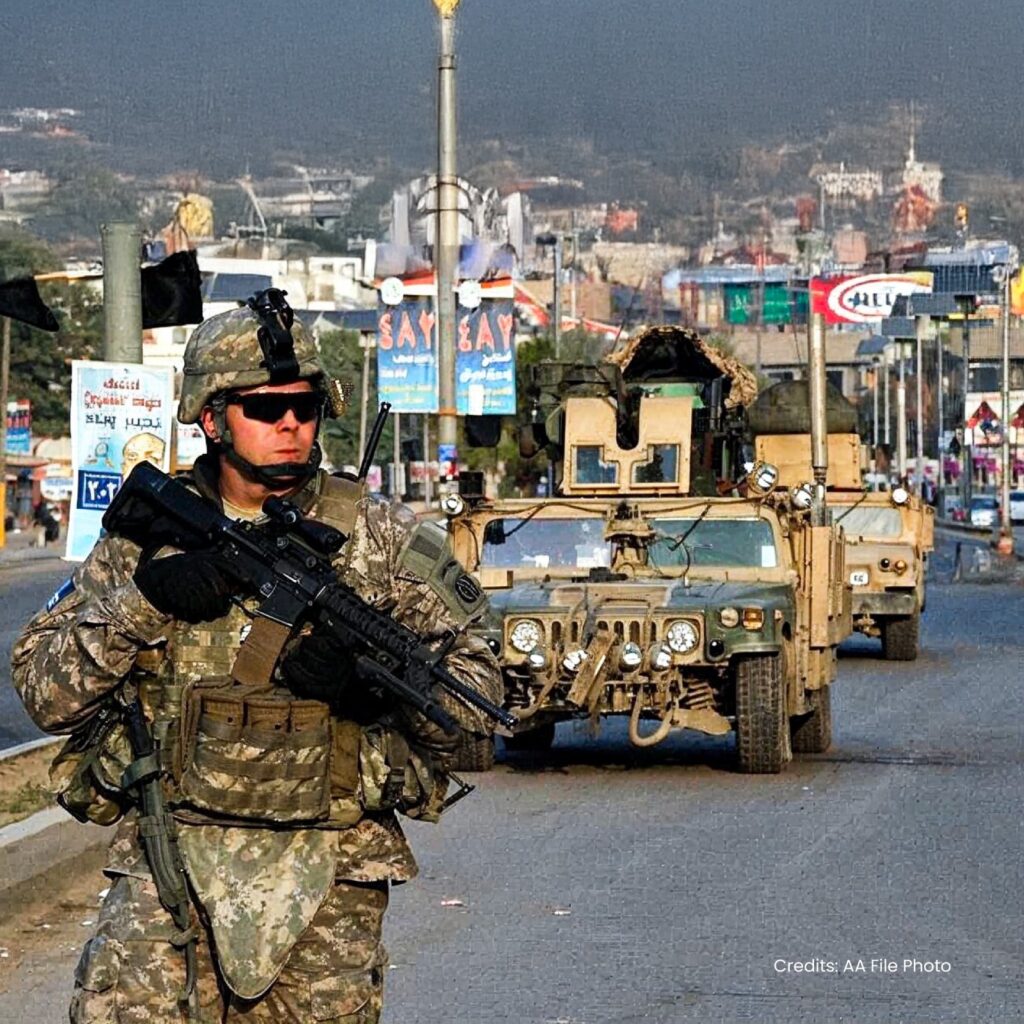
Opening scene: a giant in uniform selling a product called ‘freedom’
Quick primer before the knives come out: the US runs hundreds of military sites worldwide and spends more on defence than most countries combined. That’s just pure math and maps. SIPRI put U.S. defence spending at $997 billion recently, dwarfing the next biggest spenders.
Congressional and research reports show the US maintains an extensive network of overseas bases, commonly summarized as roughly 750 bases in some 80 countries. Though exact counting depends on definitions (what’s ‘enduring,’ what’s a small access location). Still, the footprint is huge.
If that looks like global security theatre, you’re not the only person who thinks so. The question we’ve chased in this piece: how much of this presence is genuine defence, and how much is influenced by another name?
When bases read like trade-route protection plans and not rescue maps!
Let’s start with geography. Look at where the bases are concentrated: the Persian Gulf, the Indian Ocean, the South China Sea approaches, the Mediterranean, and the Horn of Africa. Those are not random pins. They map onto global trade arteries: oil and LNG lanes, shipping chokepoints like the Strait of Hormuz, and routes that keep global supply chains humming. Protecting trade is security by any definition but it’s also political leverage.
Examples are pretty obvious:
- Diego Garcia in the Indian Ocean is less a ‘tropical outpost’ and more an unsinkable aircraft carrier positioned to influence the Indian Ocean–Middle East–Asia maritime triangle. It’s been a logistical hub for operations across the region for decades.
- Camp Lemonnier in Djibouti sits at the mouth of the Red Sea/Gulf of Aden. A hotspot for piracy once and now a watchpoint for maritime trade protection and counterterrorism. Logistics, surveillance and patrols here protect routes and interests.
When you place facilities in those spots, you’re basically guarding the global economy’s arteries. That’s both a security and commercial calculus. The same base network that helps evacuate civilians can also keep tankers moving, and at the same time, make geopolitics in favour of countries that can pay the bill.
Freedom: strategic framing or marketing tagline?
‘Promoting democracy’ is a tidy public line. But rhetoric and presence don’t always line up.
The marketing function is twofold:
- Moral packaging. Telling the world a deployment is about ‘protecting freedom’ makes presence palatable to domestic audiences and international partners. ‘Humanitarian’ and ‘democracy’ narratives help justify far-away deployments to voters and investors. The Libyan intervention (2011) and the Iraq invasion (2003), both framed partially under rights/freedom talk, while critics pointed to deeper strategic and resource-linked motives.
- Perception management. Bases host local staff programs, training missions, joint exercises, port calls, public affairs events, and humanitarian drills. All of these are propaganda-adjacent; they shape impressions of the US as both protector and benefactor. Think of it as ‘military PR’: aircraft carriers, relief flights, and parades all generate media images that say: “We care. We act. Vote our way.”
Rhetoric becomes marketing when the presence continues well after the emergency subsides. If a base opens during a crisis and stays for decades, someone is reaping strategic influence.
Bases = power projection + political theatre
It helps to separate two functions: operational utility and signal utility. Operational utility is real in the form of logistics, rapid response, and hardcore intel. Signal utility is strategic theatre, telling friends and foes who owns the map.
Some concrete roles bases play:
- Force staging & rapid strike: Diego Garcia, Andersen (Guam), and other facilities allow long-range power projection. They enable swift deployment; a show of force that certainly matters in diplomacy.
- Maritime security & commerce protection: Bases in the Gulf and Horn of Africa secure shipping routes, escort convoys, and provide ISR (intelligence, surveillance, reconnaissance). That helps both commercial fleets and strategic interests.
- Alliances & influence: Large footprints in Japan, South Korea, Germany, and the UK are as much about alliances and deterrence as they are about prestige. An American base brings US tech, training, and diplomatic weight with it, and that’s influence.
This is why critics call bases ‘billboards’. They’re physical proof of commitment and control. Bases have always granted the US bargaining chips in trade deals, access negotiations, and regional politics.
The PR angle: festivals, aid, and ‘freedom’ tours
Brand managers know optics matter. The Pentagon does too.
Consider the playbook:
- Disaster relief missions (airlifts, hospital ships) generate positive press and foster local goodwill.
- Military exercises with allies show capability and create news narratives about commitment and cooperation.
- Training programs cultivate local elites who often become political or security partners later.
All this is smart influence, and it works. Suppose the local population sees American planes delivering food, which softens resistance to a base and builds a constituency for US presence. That constituency is useful when the host government needs help, or when the US seeks basing rights, port access, or exclusive logistics arrangements.
Again: label it PR, influence operations, or soft-power projection. The intent overlaps.
Defense spending and the show of scale
Big budgets magnify the effect. The US defence budget dwarfs others: recent SIPRI and budget analyses show the US spending nearing a trillion, annually, more than the next several countries combined. That buys kit, bases, logistics, and global reach, and it all becomes part of a perceptual ecosystem where scale equals credibility.
There’s another side: size invites scrutiny. Critics ask if we’d get better security and more legitimacy by trimming the network and investing differently (diplomacy, development, climate resilience). Think tanks like Quincy Institute argue that the costs and blowback of maintaining 700–plus bases are high: financial, political, and moral.
But is it all PR? No, useful cynicism is the right stance!
Important correction: calling the footprint ‘PR’ doesn’t deny operational utility. US bases did evacuations, prevented piracy, supported disaster relief, and deterred aggression in critical moments. Those are real. But they also serve PR and power functions simultaneously. The point is not either/or but both-and.
You can respect the capability while critiquing the optics: a presence can be both life-saving and self-serving. A humanitarian airlift can win hearts and shift public opinion, which in turn protects geostrategic interests.
Cases that have proven the dual role
- Diego Garcia: A hub for long-range operations in the Indian Ocean. Tactical lifeline and political instrument. The recent sovereignty deal (UK–Mauritius) that keeps the base functionally guaranteed shows the geopolitical importance nations place on these sites.
- Camp Lemonnier (Djibouti): Built as a counterterrorism platform post-9/11; now a long-term hub protecting regional maritime routes and projecting influence into East Africa and the Arabian Peninsula.
- US bases in Gulf states (Bahrain, Qatar, UAE): Close to the Strait of Hormuz and major oil transit routes. Politically handy when energy security and presence align with foreign policy aims.
- Okinawa (Japan) & South Korea: Interoperability and deterrence acts that bind the US to regional orders; military reality with cultural friction and local resistance showing costs of hosting.
What critics get wrong and what supporters overlook?
Critics sometimes caricature every base as an imperial tentacle. That’s lazy. Many deployments are cooperative and requested by host governments for real security concerns. Supporters sometimes treat presence as purely altruistic. That’s naive. Bases have always been tools of national strategy.
The smarter critique sits in the middle: ask whether presence is calibrated to genuine risk or to long-term influence, and whether the PR veneer is obscuring trade-offs in local politics, costs, and backlash.
So what should readers take away?
- Yes, the US military defends real things: allies, shipping lanes, evacuation of civilians, and occasionally freedom of speech.
- Also, yes, a lot of the footprint functions as long-term influence architecture; a brand campaign that uses humanitarian optics, alliance theatre, and sustained visibility to shape global politics.
- The two things are not mutually exclusive. They are mutually reinforcing. That’s the whole point.
If you want a single line to use at a dinner party: America’s bases are both ambulances and billboards, sometimes at the same time.
What this means for the future of global power?
Expect more hybrid behavior: naval diplomacy plus NGO goodwill, carrier visits plus cultural programming, missile tests plus humanitarian messaging. Rival powers will imitate and contest these moves; the map will get crowded. The battle is shifting from kinetic to reputational, financial, and institutional.
If your interest is geopolitics, watch where money, logistics, and media converge. That’s where the next ‘PR base’ will be built and where real influence will be decided.
Closing whisper
A military footprint this big does two things at once: it secures and it sells. When it works as both, the buyer (the US) gets a strategic advantage. The world gets protection, markets keep flowing, and the PR reel keeps running.
If you want real clarity on motives, stop watching the press conference and start mapping the routes; trade, logistics, and long-term leases tell the truest story. And when presence outlives the crisis it was meant to fix, treat the continuing footprint as sheer advertising, not emergency response.