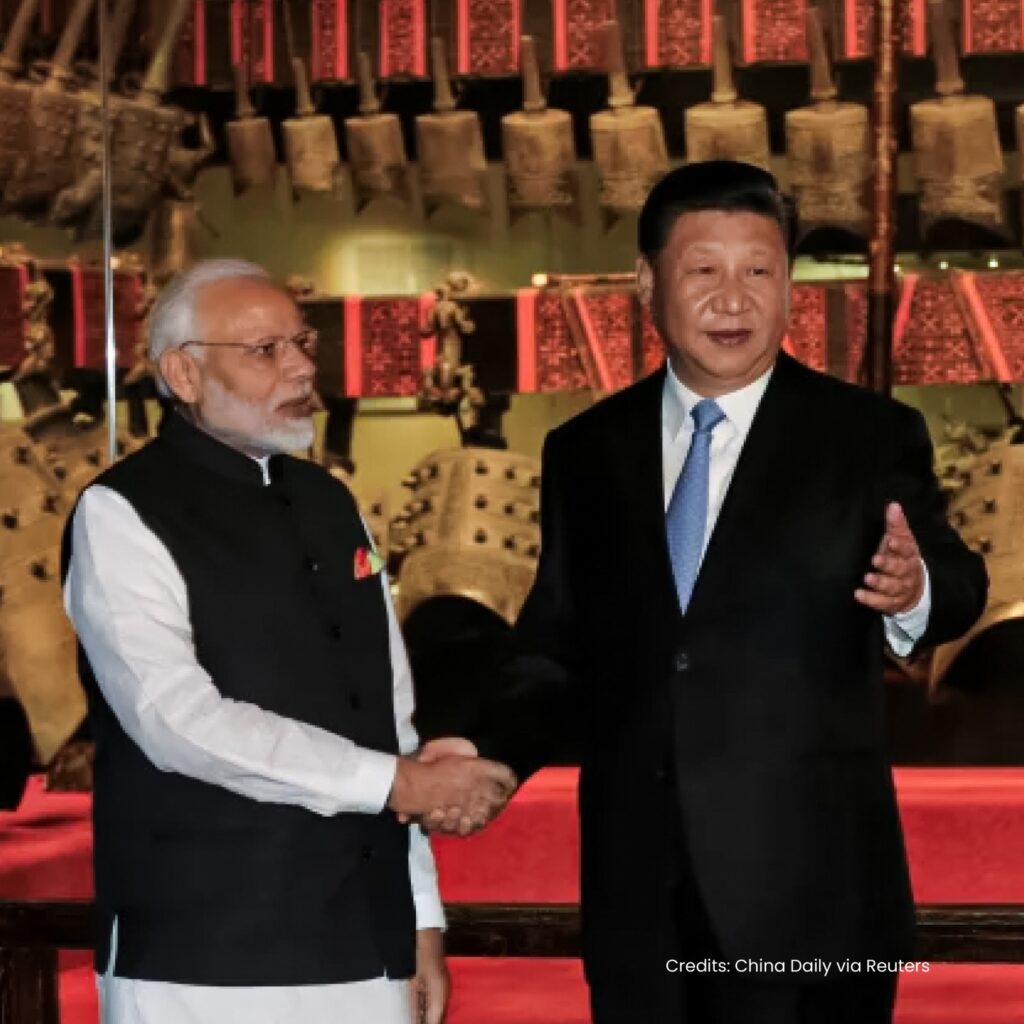
Walk into any conversation about foreign interference in India, and 8 out of 10 times, the culprit everyone points at is China. Dragons. Threats. Cyber attacks. Mobile phone backdoors. Data pipelines. Protest funding. Politician sponsorship. Militancy funding. And yes, even influencer outreach campaigns. Dramatic, visible, and scary.
But here’s the inconvenient truth that hardly anyone whispers in polite geopolitical circles: while China is busy being the noisy neighbor, a whole menagerie of other global actors, eagles, bears, wolves, jackals, and friendly uncles from the West, are quietly running their own playbooks right under our noses. And some of them have been doing it for decades.
In other words: if you’re only worried about the dragon, you’ve already lost half the forest.
The Dragon’s roar (visible and loud)
China’s approach to influence operations in India is multifaceted, involving both overt and covert strategies.
The People’s Republic of India has been active in leveraging social media platforms to shape narratives and influence public opinion in India. For instance, PRC’s state-controlled media outlets operate accounts on social media in Hindi, Bengali, Tamil, and Urdu, amassing millions of followers. These platforms have been used to push narratives that align with China’s interests, especially during periods of heightened tensions between India and China.
During India’s recent elections, Chinese influence operations actively pushed narratives aimed at influencing voter choices. These operations encompassed state-controlled media and troll farms, disseminating content that favored Chinese perspectives and sought to undermine India’s democratic processes.
China has focused heavily on building state capacity in the Tibet Autonomous Region (TAR) after the post-2008 unrest. This internal development has facilitated China’s influence operations among the Tibetan diaspora in India and Nepal. Methods include cyber-attacks, online trolling, and information collection about the Tibetan community, aiming to legitimize China’s control over Tibet and counter the Dalai Lama’s influence.
Anti-India militancy funding in Kashmir, North East Maoists, and the Naxal belt
Countless intelligence reports and search operations have seen the retrieval of ammunition, satellite phones, and small arms of Chinese mainland origin from the terrorists, Maoists, and Naxals gunned down across areas of Kashmir, North East, and Chhattisgarh.
All provocations, visible, aggressive, and sometimes clumsy. When China moves, people notice. And that’s exactly the point, they want visibility. It signals strength, power, and the ability to shape discourse openly.
But here’s the kicker: visibility isn’t always effective long-term influence. Sometimes, being loud just makes you the obvious adversary.
The quiet whisperers (institutional and invisible)
Now, let’s talk about the subtle operators. Think tanks, research grants, media collaborations, NGOs, and ‘thought leadership’ programs, as well as baptists and Islamic gatherings for religious conversion.
Unlike China, the West rarely feels the need to make headlines. Instead, influence is institutionalized:
The Eagles’ strategy
Western nations, particularly the United States and European countries, employ more subtle and institutionalized methods to exert influence in India.
- Think Tanks and Research Grants: Indian foreign policy think tanks have played a role in enhancing US-India ties, often driven by a common alignment of goals between the Indian and American states and the private sectors of both countries. These think tanks receive funding from various sources, including foreign entities, which can influence their research agendas and policy recommendations.
- Media Collaborations and Narrative Shaping: Western media outlets have been criticized for their biased and often misleading portrayal of India and the Global South. This media coverage can influence public perception and shape narratives that align with Western interests, sometimes at the expense of India’s sovereignty and policy preferences.
- NGOs and Advocacy Networks: Western NGOs and think tanks have been found to fund anti-India propaganda under the guise of promoting human rights. These organizations often operate in areas sensitive to India’s national interests, such as Kashmir, and their activities can influence international opinion and policy decisions.
The Bears, The Wolves, The Jackals, The Friendly Uncles, all in sheep’s clothing
Beyond China and Western nations, other countries also engage in influence operations in India, albeit in less conspicuous ways.
- Pakistan’s Proxy Activities: Pakistan has been involved in various activities aimed at influencing India’s internal affairs, including supporting militancy and terrorism in Kashmir and disseminating propaganda through various channels. These actions are part of Pakistan’s broader strategy to challenge India’s position in the region.
- Russia’s Strategic Partnerships: Russia maintains a long-standing strategic partnership with India, often providing military assistance and engaging in joint defense exercises. While these collaborations are generally viewed positively, they also serve Russia’s interests in maintaining influence in the region and countering Western presence. Some revelations regarding meticulously curated influence and ideological subversion programs designed for wooing Indian politicians and important stakeholders in the 80s broke the internet a couple of years ago when the interview of a former Soviet diplomat, Yuri Bezmenov, surfaced.
- Iran’s Regional Influence: Iran has historically sought to exert influence in South Asia, including in India. This has been evident in areas like energy cooperation, cultural exchanges, and strategic partnerships. Iran’s influence operations are often subtle, focusing on building long-term relationships and leveraging shared interests.
- Israel’s Strategic Engagement: Israel has developed a close strategic relationship with India, particularly in defense and technology sectors. While this partnership is mutually beneficial, Israel’s influence operations in India are often focused on promoting its own security interests and countering regional adversaries.
- Gulf States’ Soft Power: Countries like Saudi Arabia and the United Arab Emirates have used their economic power and cultural influence to build strong ties with India. Their influence operations often involve investments, religious diplomacy, sponsoring Islamic conversions & settlements, and media outreach to shape perceptions and policies favorable to their interests.
Why all this matters?
The question isn’t “Who’s meddling?” anymore. The question is: “Who isn’t?”
India’s digital, academic, and media ecosystems have been receptive, often unwittingly. Open grants, collaborations, and foreign partnerships are vital for growth, but they also create narrative levers that outsiders can pull.
A few mind-boggling observations:
- Curricula & textbooks: What students learn, debate, and present can be shaped by subtle foreign priorities embedded in academic partnerships.
- Funding flow ≈ agenda flow: Dollars follow influence. Where the money goes, the narratives often follow, whether it’s in environmental policy, social programs, or economic recommendations.
- Influence without accusation: You can’t ban or sanction a think tank quietly funding research but you can quietly shape decades of policy discourse.
In essence, influence in 2025 has become less about bombs and bots, more about brains and grants.
The geopolitical jigsaw
Here’s the strategic subtext most casual observers miss: influence operations aren’t necessarily just about shifting opinion in the short term. They’re about shaping India’s identity, norms, and policy outcomes for decades.
- China: Fast, visible, tactical strikes.
- West: Slow, institutional, cultural embedding.
Both want a hand in India’s narrative, just via different levers. And if India doesn’t build its own narrative capabilities, it risks being the stage for everyone else’s scripts.
Takeaways?
Influence in India isn’t a foreign conspiracy thriller; it’s an ecosystem reality. Everyone from Beijing to Washington has invested, in one form or another, in shaping what Indians think, read, and discuss.
The real question for India, apparently, is “who controls the narrative from within?”
Until India trains its own narrators, journalists, academics, content creators, and thought leaders, it will remain an audience for everyone else’s story.