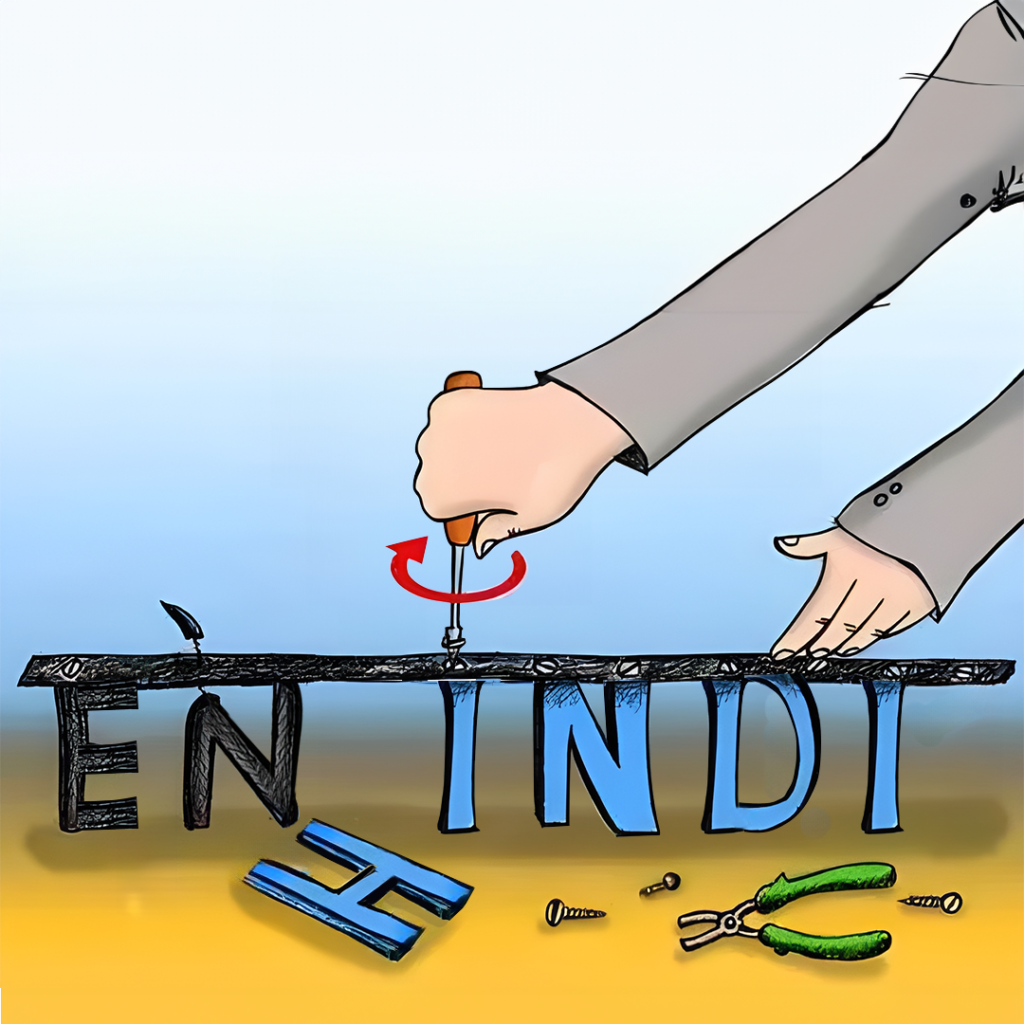
And we don’t even flinch anymore.
It’s always English when we try to sound angry. Every anti-colonial thread. Every panel discussion on identity. Every slick Instagram carousel about ‘decolonising the mind’.
We know it’s ironic.
English is the cost of access. The toll we paid to be heard. To be taken seriously. To ‘sound smart’.
And now? We think about it. Dream in it. We even post rage in it.
The Trojan Horse in your keyboard
More than bridging cultures, it was about deleting memory.
In 1835, the infamous ‘Minute’ laid the blueprint:
Thomas Babington Macaulay
“Create a class of Indians, English in taste, morals, and intellect.”
What followed was a textbook coup:
- Sanskrit texts were buried under Shakespeare.
- Gurukuls and Madrasahs were replaced by boarding schools with blazers.
- Tamil, Persian, Pali? Relegated to ‘heritage electives’.
It was always about rewiring how we think.
English became the medium. But more dangerously, the metric.
Post-Independence, same script
We got freedom. But the syllabus didn’t.
- English stayed the language of power.
- Thinking in your mother tongue became a liability.
- And anything ‘native’ was politely tagged as ‘alternative’.
We built IIMs, but still cite Harvard. We write research papers on Sanskrit poetics in flawless APA format.
The problem remains more philosophical.
What did this do to our inner software?
Try saying your full name in your native accent during an English conversation. You’ll feel the glitch.
Now try:
- Explaining karma in a corporate boardroom.
- Quoting the Rigveda at a UN climate conference.
- Pitching a tech startup named in Sanskrit.
Watch the silence. Watch the unease. Not because it’s less true. But because it doesn’t translate.
We internalized the idea that intellect sounds best in English.
The fix isn’t ditching English
We don’t need to burn books or cancel classes. Rather,
- Reintroduce regional languages as default, not decoration.
- Teach through context, not colonial templates.
- Treat Indian knowledge systems as civilizational, not ‘cultural’.
- Build digital spaces where your language isn’t dubbed but native.
This blog isn’t meant to trend!
You won’t see this go viral. You won’t hear it at literature festivals or see it on panel shows. Because it doesn’t fit the ‘global South’ narrative with corporate funding.
But you’ll feel it. In every hesitation before texting your parent in your own tongue. In every job listing that says ‘must have a strong command of English’. In every compliment that says, ‘you speak so well, for an Indian’.
That’s why Social Winds exists.
We’re building:
- Starter Kits to decode what media won’t
- Rebuttal Decks to win quiet arguments
- Case Studies to show how power scripts identity
- Stories or perspectives that never or couldn’t cross your feed
Things are in progress, shall keep you posted.
But, if this content piece felt like déjà vu, more than a coincidence, it’s actually programming.
Final whisper
Regardless of it being a Voldemort or a Dumbledore, we’re still living under its spell.